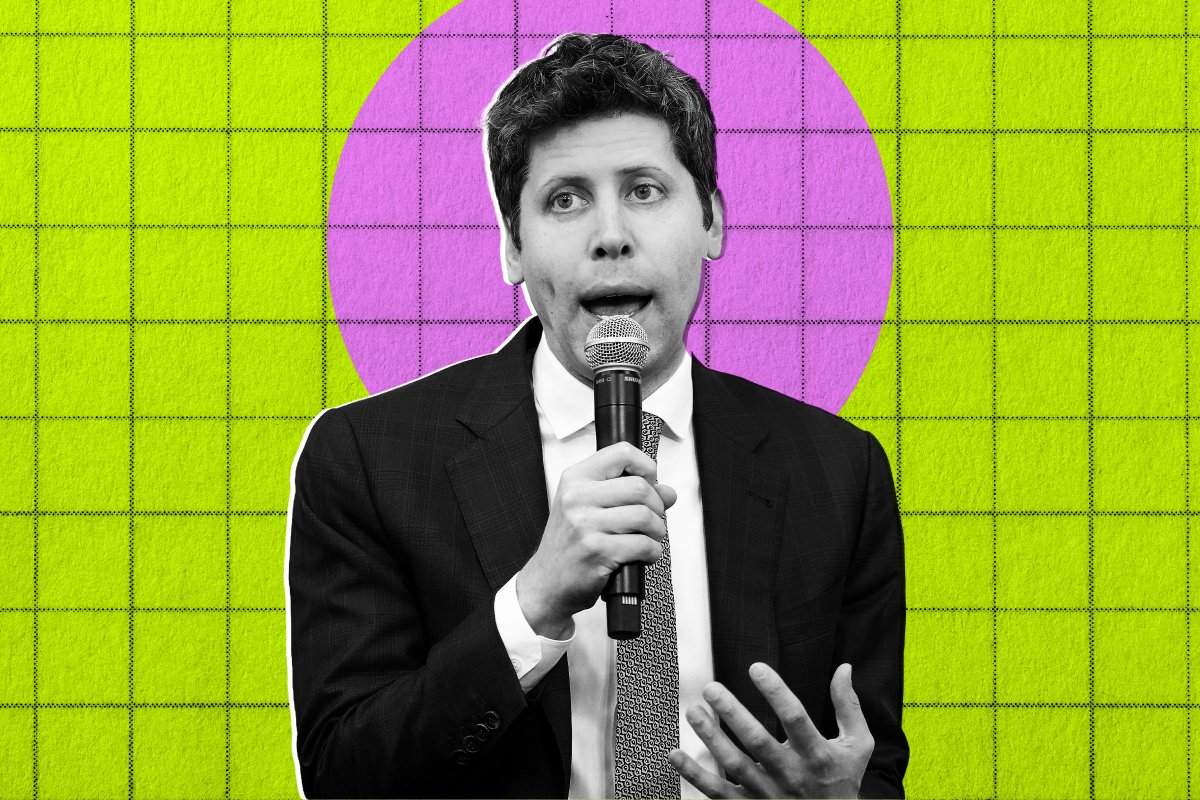
Sam Altman's recent proclamation that AI will soon replace senior executives, allowing companies to operate with just two or three people, reveals more about OpenAI's precarious financial position than about any imminent technological revolution. While AI evangelists promise a future where artificial intelligence handles the complex work of running organisations, the reality on the ground tells a different story - one where AI companies themselves are demanding ever-longer hours from expanding human workforces.
Consider Coca-Cola's recent AI-generated Christmas advertisement, trumpeted as a breakthrough in creative automation. The company made much of the fact that artificial intelligence created their holiday campaign. What they didn't advertise was that producing this supposedly AI-generated content still required hundreds of human workers - prompt engineers, quality controllers, editors, brand managers, and creative directors, labouring to coax the technology into producing something commercially viable. The AI didn't replace the workforce; it added new layers of human intervention to an already complex production process.
This pattern repeats across the AI industry. OpenAI, Anthropic, and other leading firms aren't reducing their headcount, they are expanding rapidly, demanding gruelling hours from employees racing to justify astronomical valuations. These companies require armies of engineers, researchers, content moderators, trainers, and support staff. Far from the streamlined, automated operations they promise customers, AI companies themselves remain stubbornly human-intensive enterprises.
The disconnect isn't accidental, it's existential. Altman and his peers must maintain maximum hype because the infrastructure costs of AI development are crushing. Training cutting-edge models requires billions of dollars in compute power, energy consumption that rivals small nations, and massive data centre investments. OpenAI reportedly loses money on every ChatGPT conversation. These economics only work if investors believe that they are funding not just another tool, but a civilisation-transforming revolution.
If the market recognises AI as what it actually is - a powerful tool that has made a giant leap, but in the end, just a tool, the valuations evaporate. OpenAI's reported half trillion valuation depends entirely on the assumption that AI will fundamentally replace human labor at scale, not merely augment it. Admit that AI remains deeply dependent on human expertise, judgment, and intervention, not to mention energy and social acceptance of its prioritisation over everyday concerns, and suddenly those numbers look absurd.
This explains Altman's increasingly grandiose predictions. Each new claim - AGI within reach, AI CEOs around the corner, massive job displacement imminent - serves to justify continued investment in infrastructure that has not yet demonstrated viable economics. The hype itself becomes the product, keeping capital flowing while the technology catches up to promises already made.
The irony is profound: companies built on the premise of replacing human workers are instead discovering how indispensable those workers remain. They are not building a post-human economy, they are constructing an elaborate theatre where AI plays the starring role while humans do the actual work backstage. And they need you to keep believing in the performance because if you don't, the whole production shuts down.
 Frank Landymore